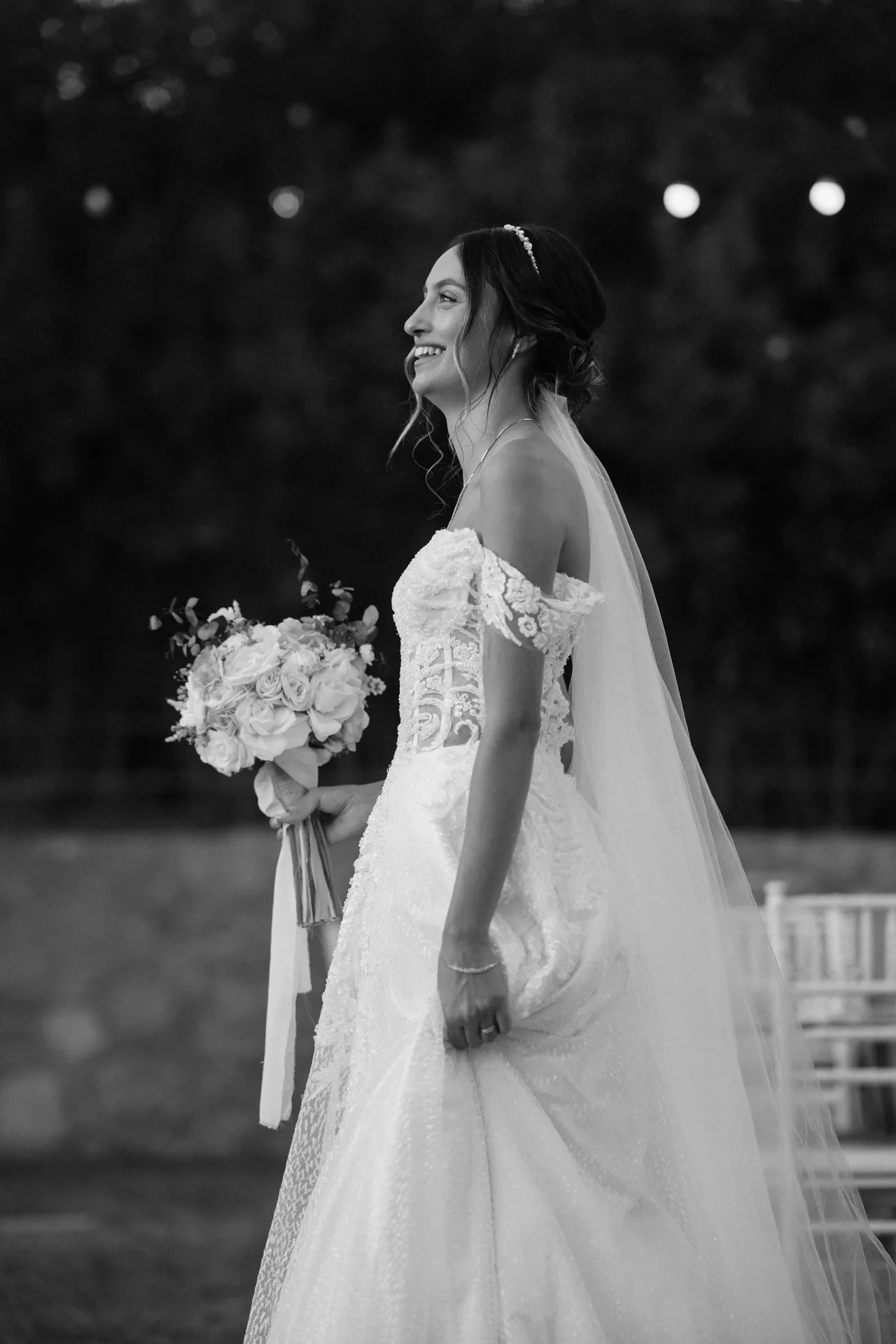
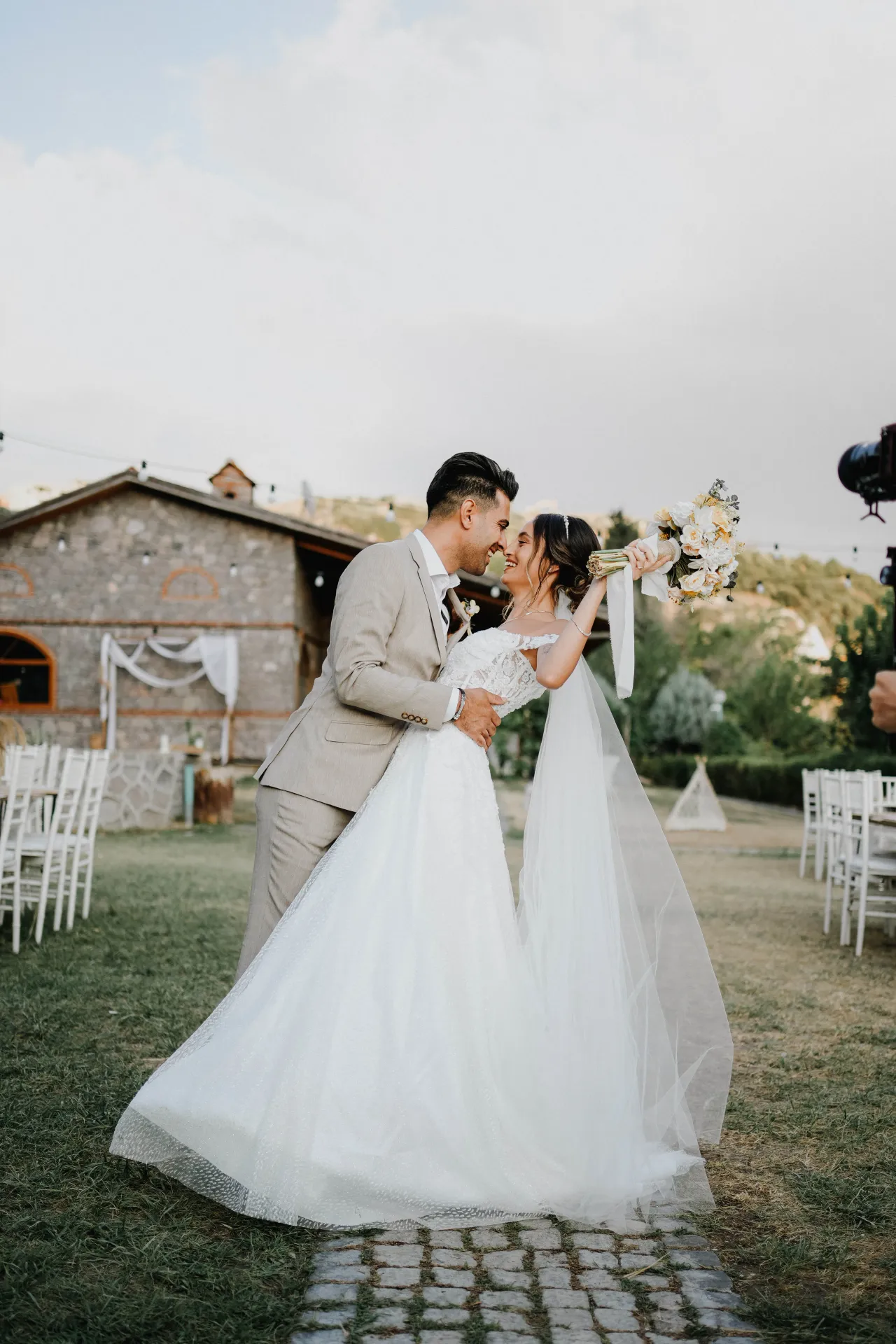
What is documentary wedding photography, and how is it different from traditional coverage? Why so many couples now choose real moments over staged poses.
Documentary wedding photography is an approach that records the wedding day as it happens, without staging it. The photographer does not build scenes; they stay in the background, wait for moments to unfold and capture them as they are. Couples choose it for a simple reason: years from now, they want to remember their wedding, not a photo shoot.
What documentary wedding photography really means
The approach borrows from photojournalism and the documentary tradition. The core idea is to observe rather than intervene. The photographer watches a wedding the way a reporter watches an event, reading the order of things, the relationships between people and the small details.
That does not make the photographer passive. If anything, it asks for constant attention: anticipating where the next moment will be, moving into the right light and distance before it arrives, and being present without getting in anyone’s way.
How it differs from traditional coverage
In a traditional approach, the photographer often acts as a director. Poses are arranged, scenes are repeated, and the day sometimes pauses for the camera. In a documentary approach the day keeps moving, and the photographer moves with it.
Both have their place. The clearest way to tell them apart is one question: would the moment in this photograph have happened if no camera had been there? In documentary work, the answer is almost always yes.
Why couples choose it
The sentence we hear most from couples is “We are not very comfortable posing.” For many people who feel stiff in front of a lens, the documentary approach is a relief. Nothing is asked of you. You simply live your day.
The reasons couples give us tend to be the same few:
- Honesty: the images carry how the day actually felt.
- Time: the hours that might go into long posed sessions stay with you and your guests.
- Story: instead of a set of pretty frames, you get a narrative you can read from start to finish.
- People: family and friends become part of the story, not just background.
- Longevity: trends in posing date quickly; a real laugh does not.
How it works on the day
We follow the rhythm of the day. During the morning preparations we stay in a corner of the room, watching the light and watching you. No one repeats anything for us. If a button comes loose or someone’s hands are shaking, that is part of the story too.
When a little direction comes in
Documentary does not mean zero direction. Some parts of the day, such as family group photographs, need a little organising by nature. We keep those short and calm, because the goal is to interrupt the flow as little as possible.
Portraits of the two of you follow the same spirit. Rather than placing you in poses, we suggest you walk together, talk, look at each other. The light and the two of you do the rest.
The details and the stories at the edges
A documentary gallery is not made only of the big moments. A half-finished coffee on a table, an old photograph in an elderly relative’s hands, a child asleep on chairs beside the dance floor. These are often the images people talk about most, years later.
Choosing a documentary wedding photographer
“Documentary” has become a popular label, so look beyond single images to complete galleries. Does the same attentiveness and calm run through a whole wedding?
Ask how the photographer works. How do they move through the day, when do they step in, when do they step back? A genuinely documentary photographer will answer those questions clearly and easily.
Our approach comes from our founder Sabahattin Gökbel’s ten years in this work: we do our best work on the days people notice us least.
Is it right for you?
If you want your day to unfold naturally, to spend it with the people you love and to recognise yourselves in the photographs, documentary coverage is very likely a good fit. The scope of coverage, and which parts of the day we accompany, we set out together in your proposal.
We would love to hear your story. Get in touch and let’s talk about your day.
Questions
Does documentary wedding photography mean no posed photos at all?
Most of the day is photographed without direction. For family photographs and a short portrait session we give gentle, minimal guidance.
We feel awkward in front of a camera. Is this approach right for us?
Often it is the best fit. We do not ask you to perform; we ask you to enjoy your day, and we take care of the rest.
What is delivered with documentary coverage?
What you receive, and in what form, depends on your wedding. We set out those details in your personalised proposal.